
Images and voice
Interactive voice mode, speech dictation, read out loud, and generative image creation.
9xchat brings multi-modal capabilities into your workspace: real-time voice conversations, instant voice dictation, read-aloud speech, and dedicated image generation.
The image playground and microphone dictation require Pro. Voice mode and Read out loud are available on all accounts. See Credits, Pro, and usage.
Interactive Voice Mode
Voice mode turns 9xchat into a natural, conversational voice assistant. Instead of typing and waiting, you speak naturally and the assistant answers back in real time.
The Voice Dock
When activated from the composer, a floating Voice Dock appears above your chat thread:
- Non-modal: The conversation remains visible, readable, and scrollable behind the dock.
- Waveform visualization: Real-time audio bars show microphone levels and assistant speech output.
- Voice Activity Detection (VAD): 9xchat listens for when you start and stop speaking, seamlessly managing turn-taking without requiring manual buttons.
- Barge-in / Interruption: You can interrupt the assistant at any time simply by speaking or clicking the orb.
- Thread synchronization: Every spoken turn is transcribed into a real message in the thread, keeping your full conversation history intact.
Voice configuration
In Settings → General, you can configure:
- Voice Chat Language: Choose your spoken language.
- TTS Voice Profile: Pick from natural voice options for the assistant's tone.
- Transcription Provider: Select 123sudo or OpenAI for audio transcription.
Voice dictation
Anywhere you can type — the chat composer, image prompts, or notes — you can Dictate instead:
- Click the Microphone icon or use the dictation shortcut.
- Speak your instructions or thoughts.
- Click Stop & Transcribe. 9xchat turns the audio into structured markdown in your input field, ready for you to review and send.
Read out loud (TTS)
Every AI response in chat includes a Read out loud action:
- Listen to long answers, code explanations, or summaries hands-free.
- Responses stream into audio so playback starts with minimal latency.
- Audio segments are cached locally for smooth repeated playback.
Pointing at part of an image
Click an image you have attached to open it, and two actions sit above it: Crop and Highlight. Both work by dragging a box over the picture; what they do with that box is the difference.
Crop cuts the image down to the box. Use it when the rest of the frame is genuinely irrelevant — a screenshot with three unrelated panels, say.
Highlight keeps the whole frame and marks the box instead, dimming everything outside it and drawing a red border. Use it when the point is look here rather than only this. Cropping to a button loses the screen around it, and the surrounding context is often what makes the question answerable.
Highlight also writes a line into your message pointing at the marked area, and that line is doing real work: a mark burned into a picture only steers the model if the words refer to it. Leave the sentence in, or rewrite it to say what you want done with the region.
Neither action changes the file you attached. Both produce a new copy and attach that instead, so the original stays available if you want to try the other one.
Image Playground
Images is a dedicated studio for generative image models (including Seedream, DALL-E, Flux, and more).
- Open Images in the sidebar and choose New Image.
- Describe your scene, style, lighting, and composition.
- Choose your image model from the dropdown under the prompt box.
- Generated images appear in your gallery history, where you can download, copy, or inspect generation parameters.
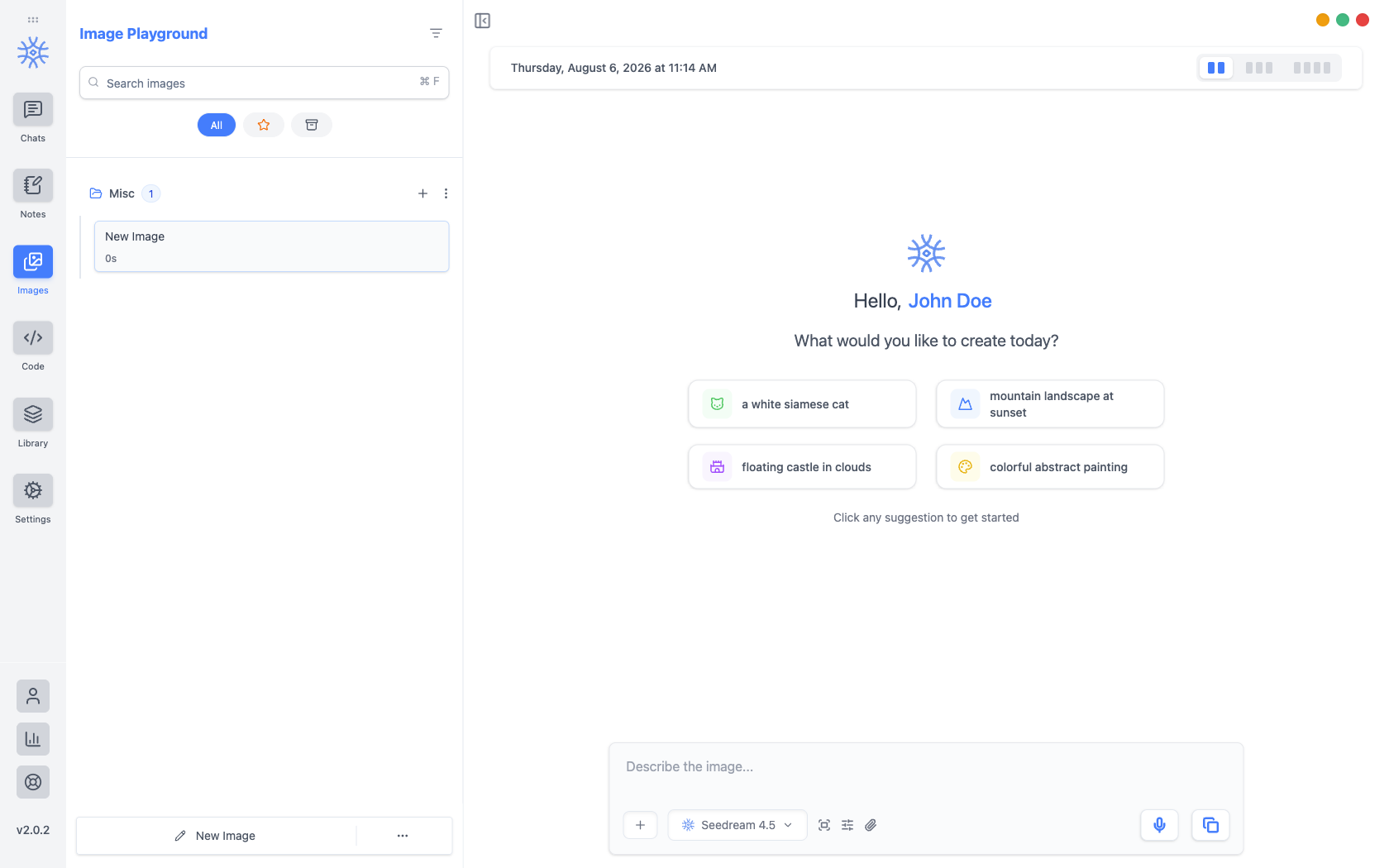
You can also generate images directly in chat using the Generate Image tool.
Billing and privacy
- Cloud image models and transcription draw from your 9xchat credit balance or your configured API keys.
- Audio Privacy: Audio dictation and speech synthesis require network processing through your selected provider (123sudo or OpenAI). Audio leaves your machine even when your chat model is set to local. See Privacy and data flow.